


 Schedule Your Free Consultation
Who Gets the Family Home During the Divorce in Illinois?
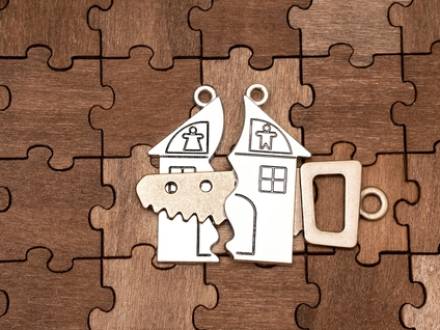 Property division is one of the most contested parts of any divorce, and few assets tend to generate more conflict than the family home. For many couples, a home is the largest asset they share, and deciding what happens to it involves both financial and emotional considerations that can be hard to separate.
Under 750 ILCS 5/503, Illinois divides marital property according to the principle of equitable distribution. That means the court divides property based on what it considers fair, but not necessarily equally. If the family home was purchased during the marriage, it is generally considered marital property and is subject to division. If you're going through a divorce in 2026, a Geneva, IL divorce lawyer can help you understand your options and fight for an outcome that protects your family's future.
What Is the Difference Between Marital and Non-Marital Property in Illinois?
Before a court can divide property, it has to determine what is marital and what is not. Under 750 ILCS 5/503, marital property includes most assets acquired by either spouse during the marriage. Non-marital property includes things like assets owned before the marriage, gifts given to one spouse, and inheritances received by one spouse.
The family home gets complicated when one spouse owned it before the marriage, but both spouses contributed to the mortgage or improvements during the marriage. In those cases, part of the home's value may be considered marital property. An attorney can help sort through these details and make sure your contributions are recognized.
Can You and Your Spouse Decide What Happens to Your Home on Your Own During Divorce in Illinois?
Under 750 ILCS 5/502, spouses can reach their own agreement about how to divide their property, including the family home, without a judge deciding for them. This is called a separation agreement, and courts will generally honor it as long as it is not unconscionable and was entered into voluntarily.
Agreeing on your own, with the help of attorneys, gives you more control over the outcome. You and your spouse know your family's situation better than any judge does. If you can agree on what happens to the home, you can avoid a long and costly court battle.
What Factors Does an Illinois Court Consider When Dividing the Family Home?
When spouses cannot agree, a judge will decide. Illinois courts look at a wide range of factors when determining what is equitable. The court looks at how long the marriage lasted, each spouse's financial situation, and each spouse's earning potential. It also considers what each spouse contributed to buying and maintaining the home, the needs of any children involved, and which parent has the majority of parenting time.
The court may also examine whether one spouse gave up career opportunities to care for the family, any agreements made between the spouses, and the tax consequences of different division options. No single factor controls the outcome, and the court looks at the full picture.
What Are the Most Common Outcomes for the Family Home in an Illinois Divorce?
There is no one-size-fits-all answer, but there are a few common ways the family home is handled. These include:
-
One spouse buys out the other's share and keeps the home, often by refinancing the mortgage in their name alone.
-
Both spouses agree to sell the home and split the proceeds.
-
One spouse stays in the home temporarily, often to allow children to finish a school year, with a plan to sell at a later date.
-
The home is awarded to one spouse as part of a larger property settlement where the other spouse receives assets of comparable value.
Each option has financial and practical implications. An attorney can help you think through which approach makes the most sense for your situation.
Schedule a Free Consultation With Our Kane County, IL Divorce Attorney
At McSwain Rapp Law, LLC, we understand how much is at stake, and we bring a compassionate approach to every case while remaining ready to fight hard for our clients when the situation calls for it. You deserve an attorney who will take your concerns seriously and pursue the best possible outcome for you and your family.
If you are going through a divorce in Kane County or the surrounding area, contact our Geneva, IL divorce lawyer today and call 630-581-2877 to get started.
Your New Beginning Starts Here
If you are ready to proceed with your case, our firm can get to work straight away. You can reach us at either of our two conveniently located offices in Wheaton and Geneva.
Wheaton
2100 Manchester Road, Building B, Suite 1050 Wheaton, IL 60187
P 630-581-2877
Geneva
205 1/2 West State Street, Suite C Geneva, IL 60134
P 630-581-2877
By Appointment Only

If you have any questions about the services we offer, you can reach us through our online contact form.
From our offices in Wheaton and Geneva, Illinois, we help clients throughout the area, including St. Charles, Batavia, Elgin, Elburn, Geneva, Wheaton, Naperville, Yorkville, Oswego, Aurora, West Chicago, Glen Ellyn, Lombard, Downers Grove, Lisle, Warrenville, Carol Stream, Bloomingdale, Bartlett, and surrounding communities across DuPage County, Kane County, and Kendall County.
Results listed are not a guarantee or indication of future case results.
© 2026 McSwain Rapp Law, LLC | 2100 Manchester Road, Building B, Suite 1050, Wheaton, IL 60187 | 630-581-2877
