


 Schedule Your Free Consultation
Recent Blog Posts
When Can Spousal Maintenance Be Terminated in Illinois?
 Spousal maintenance, which most people call alimony in Illinois, ends automatically in some situations. However, it doesn’t stop on its own just because paying has become difficult. If you have questions about ending or modifying your maintenance order in 2026, our Kane County, IL alimony lawyers can tell you whether your situation allows for it.
What Events Automatically End Spousal Maintenance in Illinois?
Under 750 ILCS 5/510(c), the obligation to pay future maintenance ends when either party dies, when the person receiving it remarries, or when that person lives with someone else on a resident, continuing conjugal basis. These apply unless your divorce judgment or written settlement says otherwise.
Can My Child Choose Which Parent to Live With in Illinois?
 Your child doesn't have an absolute legal right to choose which parent to live with in Illinois. However, a judge may consider a mature child's wishes as one factor among many when deciding custody and placement. If you're dealing with a custody dispute in 2026, our Wheaton, IL child custody lawyers can help you understand how your child's preferences might actually factor into your case.
What Does Illinois Law Say About a Child's Custody Preference?
Under 750 ILCS 5/602.5 and 750 ILCS 5/602.7, Illinois courts consider a child's wishes as one of several factors when determining parental responsibilities (the term for custody in Illinois) and parenting time (commonly known as visitation). This preference is never the deciding factor on its own, though. Judges weigh the child's stated preference alongside many other considerations. This includes each parent's relationship with the child and each parent's ability to provide a stable environment.
When Do You Need an Attorney to File for Divorce in Illinois?
 You are not legally required to have an attorney to file for divorce in Illinois. However, in most situations, having one makes a significant difference in the outcome. Divorce involves legal decisions that can affect your finances, your children, and your future for years to come. What seems straightforward at the beginning can quickly become complicated. If you are thinking about divorce in 2026, the Geneva, IL divorce lawyers at McSwain Rapp Law, LLC can give you an honest assessment of your situation and help you understand what is at stake.
Can You File for Divorce in Illinois Without a Lawyer?
Illinois allows people to represent themselves in court, which is called proceeding pro se. There are even forms available through the Illinois court system for uncontested divorces where both parties agree on everything.
But just because you can file without an attorney does not mean you should. The forms themselves are only part of the process. You still have to understand what you are agreeing to, make sure the paperwork is filed correctly, and ensure that the final judgment protects your interests. Many people who try to handle their own divorce end up with agreements that hurt them financially or legally, sometimes without realizing it until years later.
Earnest Money Disputes in Illinois Residential Real Estate Transactions
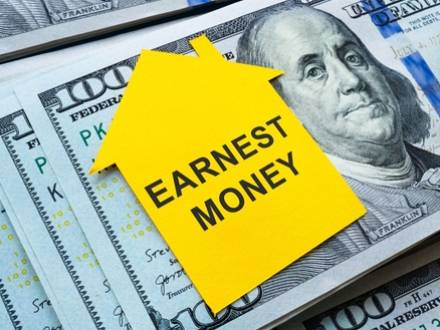 Buying or selling a home involves a lot of moving parts, and when a deal falls through, the question of who keeps the earnest money can get complicated fast. The earnest money deposit is the amount a buyer puts down after an offer is accepted to show they are committed to the purchase. When the transaction does not make it to closing, both sides often have very different ideas about what should happen to that money.
In Illinois, the answer depends on several things, including what the contract says, why the deal ended, and whether the buyer and seller can come to an agreement without going to court. If you are in this situation right now, our DuPage County residential real estate lawyer can help you figure out where you stand and what your options are.
Who Has the Earnest Money During a Real Estate Transaction?
In Illinois, the earnest money deposit does not sit with the buyer or the seller while the transaction is pending. It is held by a neutral third party, which is typically the seller's brokerage, a title company, or an attorney. This neutral party is known as the escrow holder. Their job is to hold the funds safely until the deal closes or until both sides agree in writing on what should happen to the money. If no agreement is reached, the escrow holder cannot release the funds to either party without a court order telling them to do so.
Can I Stop My Ex From Introducing Their New Partner to Our Kids?
 In most cases, you cannot legally prevent your ex from introducing a new partner to your children. But that doesn't mean you're without options. Illinois law gives courts the ability to step in when a new partner's presence genuinely puts your child at risk. There are practical steps you can take to protect your kids even without going to court.
According to a 2025 U.S. Census Bureau working paper, half of divorced parents remarry within five years, which means new partners entering children's lives is incredibly common. Courts handle these disputes regularly. The question isn't whether your ex can date someone new. It's whether that person's involvement is harming your child. If you have concerns about your ex’s new partner in 2026, our Kane County, IL parental responsibilities lawyer can help you understand your legal options.
How Can You Protect Yourself in a High-Conflict Divorce?
 A high-conflict divorce can feel like you are constantly putting out fires. One person is uncooperative, communication breaks down, accusations fly, and every decision turns into a battle. Protecting yourself in this kind of situation means being smart about how you document things, how you communicate, and how you respond when you feel provoked. It also means having the right legal team in your corner from the start. If you are preparing for a contentious divorce in 2026, our Wheaton, IL divorce lawyers can help you stay focused and protect what matters most.
What Makes a Divorce "High Conflict"?
Not every difficult divorce is a high-conflict one. High-conflict divorces involve a constant pattern of hostility, manipulation, and an unwillingness to cooperate, even when it clearly hurts the children or drags the process out. Common signs include fighting over small issues in court, false allegations, attempts to turn the children against the other parent, and using the legal process as a weapon instead of a tool.
Who Gets the Family Home During the Divorce in Illinois?
 Property division is one of the most contested parts of any divorce, and few assets tend to generate more conflict than the family home. For many couples, a home is the largest asset they share, and deciding what happens to it involves both financial and emotional considerations that can be hard to separate.
Under 750 ILCS 5/503, Illinois divides marital property according to the principle of equitable distribution. That means the court divides property based on what it considers fair, but not necessarily equally. If the family home was purchased during the marriage, it is generally considered marital property and is subject to division. If you're going through a divorce in 2026, a Geneva, IL divorce lawyer can help you understand your options and fight for an outcome that protects your family's future.
What is the Difference Between Moving and Relocating With Children?
 In Illinois, many parents are surprised to learn that moving to a new home with their child is not always a straightforward decision. In 2025, data on parenting time in Illinois showed that the nonprimary parent usually receives only about 23 percent of parenting time with their child. Because time with each parent is already limited, even a move that seems minor can have a major impact. One of the most common issues parents face is misunderstanding the legal difference between moving and relocating with children.
As of 2026, Illinois courts continue to strictly enforce relocation rules to protect children’s stability and their relationship with both parents. If you are thinking about changing where your child lives, a Geneva, IL parental rights lawyer can help you understand what the law requires before you move.
Alimony May Not End at Retirement in Illinois
 In Illinois, many people who pay spousal maintenance (also called alimony) think retirement will automatically lower or end their payments. But Illinois courts are not accepting that idea as easily as they used to. Judges now take a closer look at whether a retirement is made in good faith, especially when the person still owes maintenance.
If you assume retirement will automatically end your maintenance payments, it could be an expensive mistake. If you retire before the "normal" retirement age, the court may require strong proof that your choice was reasonable and necessary.
Courts may look closely at your timing, your reasons for retiring, how you replace your income, and even your lifestyle. If you are planning to retire and hope that will end your maintenance obligation, talk to an experienced DuPage County, IL family law attorney before you finalize those plans.
Illinois Divorce and Sweat Equity: What Is It Really Worth?
 In many cases, small family businesses succeed not because of capital investments, but because one spouse poured years of unpaid labor and personal sacrifice into building the company. This is known as "sweat equity," and can become one of the most hotly disputed issues during the asset division portion of an Illinois divorce.
Questions may arise as to whether the sweat equity created a business interest for the non-owner spouse. Sweat equity valuations can be complex, yet whether a business is divided fairly often hinges on these valuations. While Illinois courts have developed clear rules regarding sweat equity, the application of these rules may be highly contested.
Whether your spouse is claiming sweat equity in a business you own, or you contributed hundreds of hours of unpaid sweat equity to your spouse’s business, it is essential that you speak to a knowledgeable Kane County, IL family law attorney.
What Counts as Sweat Equity During an Illinois Divorce?
Sweat equity refers to non-monetary, labor-based contributions that increase the value of a business. Under 750 ILCS 5/503, any effort, skill, or labor performed during the marriage is presumed to be a marital contribution. Examples of sweat equity include:
Your New Beginning Starts Here
If you are ready to proceed with your case, our firm can get to work straight away. You can reach us at either of our two conveniently located offices in Wheaton and Geneva.
Wheaton
2100 Manchester Road, Building B, Suite 1050 Wheaton, IL 60187
P 630-581-2877
Geneva
205 1/2 West State Street, Suite C Geneva, IL 60134
P 630-581-2877
By Appointment Only

If you have any questions about the services we offer, you can reach us through our online contact form.
From our offices in Wheaton and Geneva, Illinois, we help clients throughout the area, including St. Charles, Batavia, Elgin, Elburn, Geneva, Wheaton, Naperville, Yorkville, Oswego, Aurora, West Chicago, Glen Ellyn, Lombard, Downers Grove, Lisle, Warrenville, Carol Stream, Bloomingdale, Bartlett, and surrounding communities across DuPage County, Kane County, and Kendall County.
Results listed are not a guarantee or indication of future case results.
© 2026 McSwain Rapp Law, LLC | 2100 Manchester Road, Building B, Suite 1050, Wheaton, IL 60187 | 630-581-2877
